
RRN Conference 2025: The art of the possible – paving the way towards a restraint-free future
November 21, 2025

Paving the way towards a restraint-free future
On 13-14 November 2025, professionals and practitioners across education, health and social care, together with people with lived experience, gathered in Liverpool and online for this year’s Restraint Reduction Network Conference.
Brought together by a shared commitment to ending the unnecessary use of restrictive practices, delegates explored a simple yet challenging question: Is a restraint-free future possible – and how do we get there?
A programme of key voices leading the way
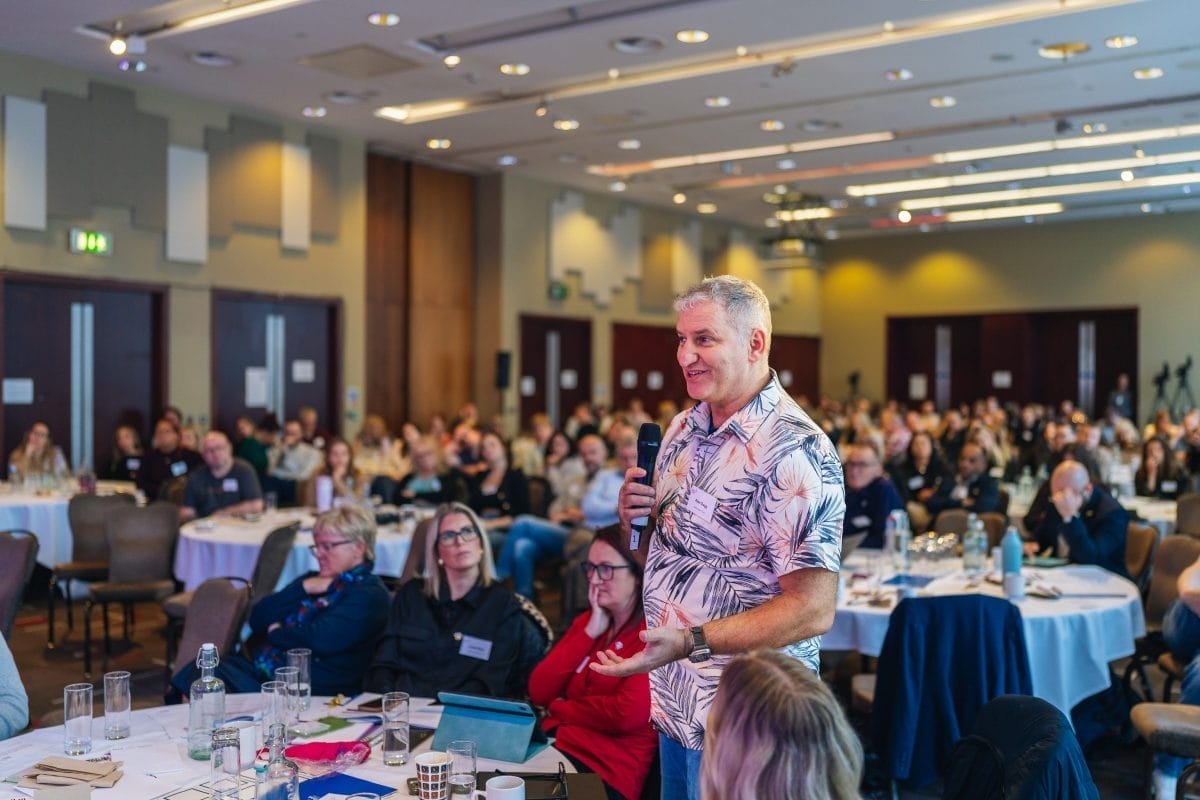
Featuring lived experience speakers, practice leaders and academic experts, the conference brought diverse perspectives to, and shone light on, the RRN’s Six Core Strategies for restraint reduction through an incredible programme of expert keynotes and interactive workshops.
Challenging labels and reclaiming stories
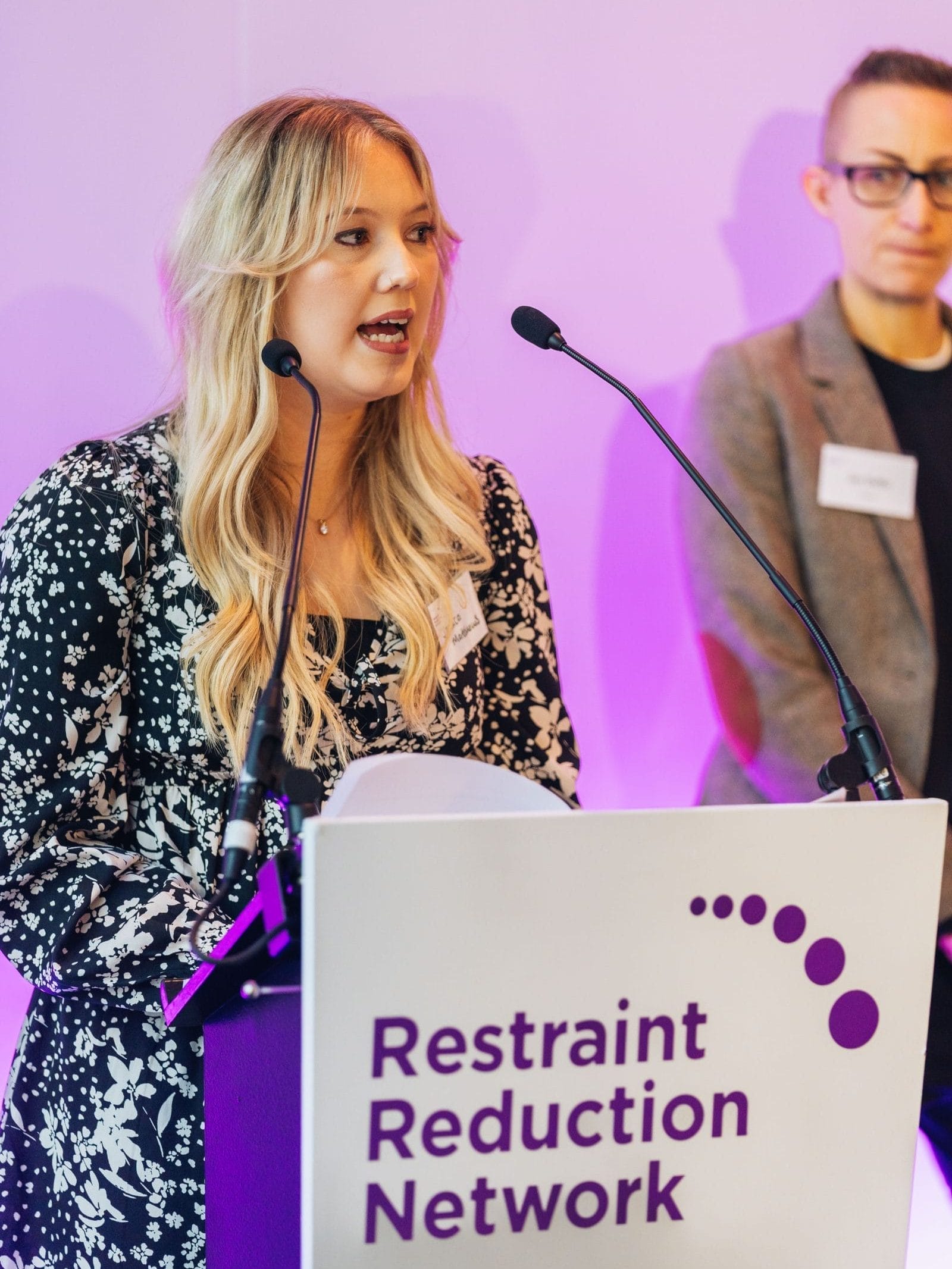
The Conference opened with a powerful lived experience testimony on the potentially restrictive nature of diagnostic labels. Dr. Jen Daffin introduced The Truth Project, an approach led by the charity Platfform which hears and bears witness to people’s experiences. Co-speaker, Jess Matthews, a contributor to the project, shared:
“Seeing individuals as humans in the context of their experience helps us empower them to reclaim their story.”
From dehumanisation to Re-Humanisation
Author of Beautiful lives: how we got learning disabilities so wrong, director, campaigner and parent, Stephen Unwin offered a sobering study on the historical treatment of people with learning disabilities. Highlighting how society has often dehumanised people, he called for re-humanisation of the way we see and support people with learning disabilities.
Continuing the call for re-humanising approaches to support, Dr. Georgia Pavlopoulou closed the morning programme with a call to prioritise human connection in care. She advocated for an experience-sensitive approach, urging carers and support workers to be attuned to both their and other’s emotional landscapes.

Panel reflections: Is Restraint ever justified?
Taking stock of the morning, a thought-provoking panel of academics, practitioners and people with lived experience tackled questions around the possibility of a restraint-free future – Is restraint a ‘necessary evil’, or simply evil? How do we define proportionality and last resort? What is the effect of racism and other prejudices on misuse of restraint?
from control to curiosity
The afternoon programme continued these important conversations with innovative approaches to storytelling and behaviour support.
Prof. Hel Spandler and Dina Poursanidou introduced Madzines – creative zines that offer unrestricted and liberating ways for people to retell their own story of restraint. The day closed with Kit Messenger from Changing Chances CIC challenging the ‘carrot and stick’ approach to behaviour in education, urging those working in education to be ‘curious not furious’, seeking to understand reasons behind behaviours and being equipped to support children through them.

a diverse range of interactive workshops
Interactive workshops – both in-person and online – offered hands-on, in-depth learning on an amazing breadth of subjects, from relational safety as the foundation for trauma-informed care, artistic mask-making as a tool to understand the hidden realities of restraint, and approaches to restraint reduction underway in contexts outside of the UK.
Tackling restriction in the community and in schools
Day two of the Conference opened by first taking us into community settings. Gambinga Gambinga spoke on the reality of unseen restrictive practice in the community, encouraging continued vigilance and advocacy to name and challenge such practice in the journey towards restraint elimination.
From the community, we moved to schools, where MSP Daniel Johnson shared progress on his Restraint and Seclusion in Schools (Scotland) Bill, also known as Calum’s Law and championed by RRN Trustee Beth Morrison. Building on the campaigning work of families with children with learning disabilities, the Bill aims to put guidance on a statutory basis in Scotland. Daniel made the case for timely and transparent communication, for remediation and learning when things go wrong, and above all for the protection of the legal and moral right to a safe education for children.
research that moves us forward
In the afternoon, we took a closer look at some fascinating and important research:
- Prof. Alan Simpson and Dr Jessica Griffiths summarised the findings of a review into the impact of relational care approaches on self-harm and suicide.
- Dr Nutmeg Hallett laid out a framework for making post-incident debriefing meaningful, and called for a change to conditions, not the concept, as we approach debriefing.
- Lastly, Prof. John Baker and Bethany Griffin introduced WardSonar, a lived experience-led way of measuring the atmosphere of a ward in real-time, and thereby enabling proactive de-escalation and better conditions for patients and staff.
reframing the narrative
In one of the final and perhaps most moving keynotes, HOPE(S) Consultant Emma Highfield spoke about the use of narrative approaches in restricted settings, which seeks to reposition those in restricted settings to be at the centre of their own story. Emma introduced us to ‘Sophie’, a woman in Long-Term Segregation, who “waved” to the Conference as her story was shared. As Emma closed, the whole Conference joined in waving back at Sophie, acknowledging her humanity and restoring her to the centre of her own story.
join the journey towards a restraint-free future
This year’s conference left no doubt that relationships are central to successful restraint reduction; cultural change is essential for sustainable impact; and lived experience voices are critical in ensuring people’s humanity is upheld.
Looking ahead to 2026, the RRN is pleased to be supporting the movement towards restraint elimination and excited by the launch of our new Community of Practice, and the Restraint Reduction Partners Programme.
We’re deeply encouraged by the passion and dialogue sparked at the conference. Thank you to everyone who attended and made the Conference such an inspiring event. If you weren’t there this year, we’d love to welcome you next time!
If you aren’t already an RRN member, membership is free! Join the movement towards a restraint-free future today – restraintreductionnetwork.org/membership